Many of the eCommerce businesses we work with spend almost their entire budget bringing in new traffic, across Meta, Google and TikTok. Then that traffic arrives, looks around, sometimes buys once, and disappears.
Email is the channel that works on people who already know you. And the part that performs best is not newsletters sent by hand, but automated flows: messages that go out on their own when a customer does, or does not do, something.
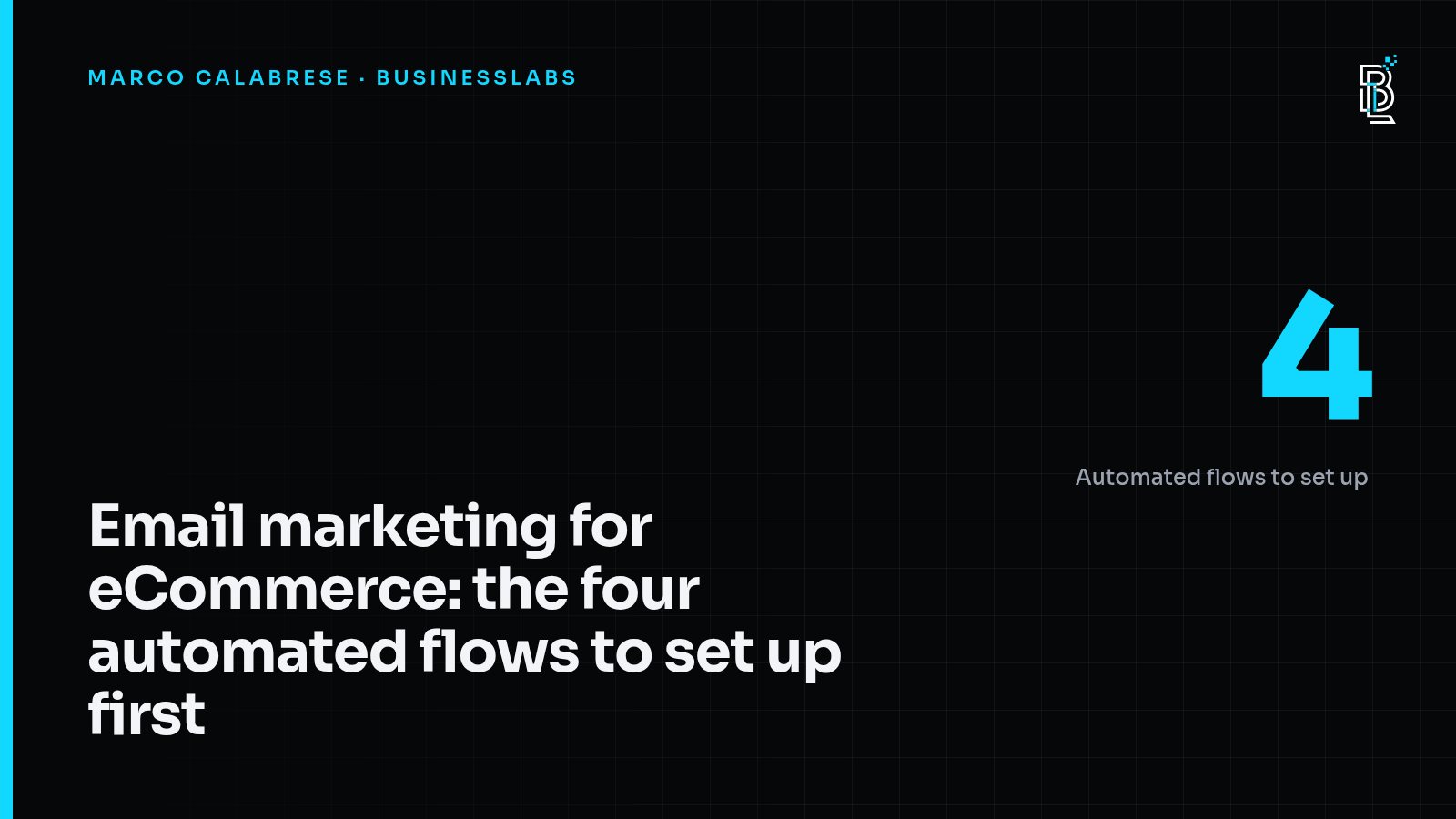
Here are the four we always start with.
1. Welcome
It starts when someone joins the list, from the site pop-up or at checkout. It is the moment when attention is highest: the person has just given you their address.
What we put in the sequence:
- the first message straight away, with what was promised (a discount, a guide, free shipping);
- a second message a few days later, telling the brand story and showing the best-selling products;
- a third with frequently asked questions and customer reviews.
Three emails are enough. More important than length is that the first message arrives immediately, not the next day.
2. Abandoned cart
The customer has put a product in the cart, started checkout and not completed it. It is the flow that usually recovers the most sales, because it speaks to people who were one step away from buying.
The rules we follow:
- first message within a few hours, with the product, the photo and a direct link to the cart;
- second message the next day, answering the typical doubts: shipping, returns, delivery times;
- any discount only in the last message, and not always. If customers learn that abandoning the cart brings a code, they will do it every time.
3. Abandoned browse
Similar to the cart, but one step earlier: the customer looked at a product and left without adding it. It only works for people who are already subscribed or recognised by the site.
Here the tone is lighter. Not "you forgot something", but "did you like this? here are some more". One message, two at most.
4. Post-purchase
It is the most neglected flow, and it is the one that builds the returning customer.
What it contains:
- a confirmation that is not just a receipt: what happens now, when the parcel arrives;
- tips on using the product, a few days after delivery;
- a review request, once the customer has had time to try it;
- after a few weeks, a complementary product or a reorder, if the product is consumable.
For those who also sell on Amazon there is a limit to respect: marketplace customers are not customers on your list. Amazon does not allow their data to be used for your marketing. The flows concern people who buy from your site.
The most common mistakes
Switching the flows on and never looking at them again. They need checking every month: open rates, clicks, attributed sales. A flow that does not perform should be rewritten, not left there.
Using the same copy for everyone. Someone who has bought three times should not receive the same message as someone who has never bought. Tools such as Klaviyo let you split flows by behaviour.
Forgetting consent. In Europe GDPR applies: you need clear consent at sign-up and an easy way to unsubscribe in every email.
Sending too much. If a customer is in three flows at the same time, they receive three emails on the same day. You need to set rules that prevent it.
Where to start
If you have no flows active today, start with the abandoned cart and the welcome. They are the ones that deliver results first. Then add post-purchase and abandoned browse.
In the BusinessLabs Marketing service we set up these flows together with paid campaigns, because the two channels work better together: advertising brings people in, email brings them back.
Further reading: Marketing service · eCommerce checkout: where sales are lost
Originally published on LinkedIn

Co-founder of BusinessLabs since 2023, he leads the marketplace area: strategy, launch and growth of Amazon accounts and expansion into foreign markets, from Europe to the Emirates and South America.
LinkedIn