When we calculate margins with a new client, returns are almost always the forgotten item. Product, shipping and advertising go into the budget. The return comes later, and by then it has already eaten part of the profit.
They cannot be eliminated, and you should not try: a clear returns policy also helps you sell more. But they can be reduced and managed better.
The basic rules in Europe
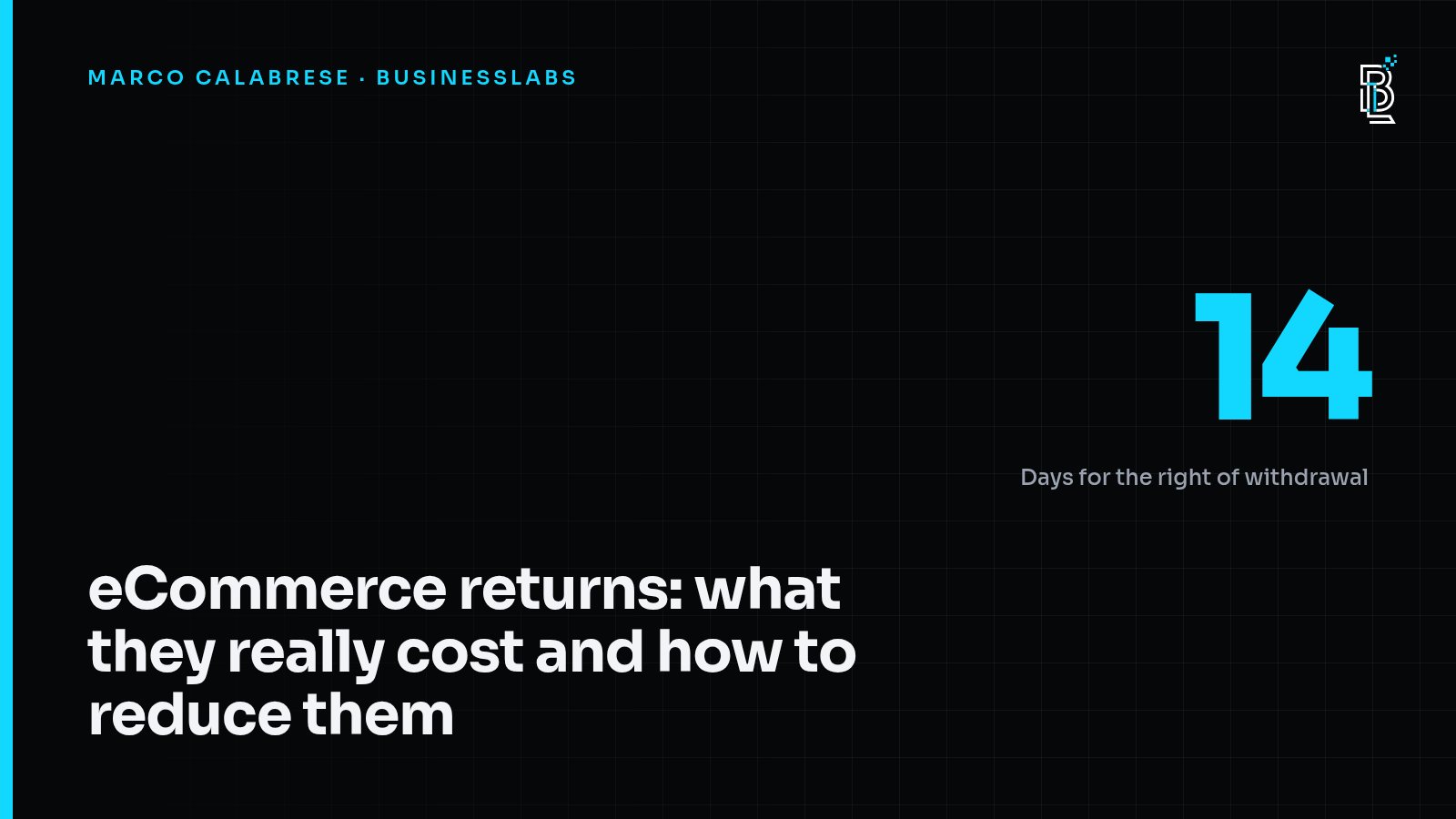
Anyone selling online to consumers in Europe must respect the right of withdrawal: the customer has 14 days to return the product without giving any reason. The rule comes from Directive 2011/83/EU, transposed in Italy into the Consumer Code.
Two details many overlook:
- if the customer is not properly informed of the right of withdrawal, the period is extended up to 12 months;
- the seller can state that return costs are borne by the customer, but must say so before the purchase.
On marketplaces the platform's rules also apply, and they are often more generous to the customer than the law.
What a return costs
The cost is not just the return shipping. The real items are:
- outbound shipping, already paid and not recoverable;
- return shipping, if borne by the seller;
- product inspection and refurbishment;
- products that can no longer be sold as new;
- customer-service time;
- payment fees, which are not always refunded with the refund.
Added together, these items mean a returned product often costs more than the sale earned.
Why customers return
In the data we analyse the reasons are almost always the same:
- the product is not what they expected: colour different from the photos, material, dimensions;
- wrong size or fit, especially in clothing and footwear;
- defect or damage in transit;
- deliberate multiple purchase: the customer orders two sizes and keeps one.
The first two depend almost entirely on the product listing. And that is where you act first.
How to reduce them
Faithful photos and descriptions. An over-retouched photo sells more today and comes back tomorrow. Better to show the product as it is, including the less attractive details.
Real size guides. Not a generic table, but garment measurements and concrete advice: "runs small, take one size up".
Read the return reasons. On Amazon and in the main management systems every return has a reason. If the same product always comes back as "not as described", the problem is in the listing, not the customer.
Adequate packaging. Returns due to transit damage almost always fall with better packaging, which costs less than the return.
Quality control upstream. A manufacturing defect that passes inspection becomes dozens of returns. Inspection before shipment from the supplier is the cheapest defence.
Handling them well when they arrive
A well-handled return can turn into a returning customer. The rules we recommend:
- a simple procedure, with a ready-made return label and clear instructions;
- fast refunds, as soon as the product has been checked;
- offering an exchange before a refund, when it makes sense;
- returned products in good condition put back on sale as "refurbished" instead of being disposed of.
The point
Returns are not just a logistics cost. They are a signal of what is not working in the listing, the product or the packaging. Those who read them carefully every month end up selling more and taking back less.
In the BusinessLabs Logistics service we analyse returns together with carriers, rates and fulfilment, because that is where part of the margin is decided.
Further reading: Logistics service · An Amazon product listing that sells
Originally published on LinkedIn

Co-founder of BusinessLabs since 2023, he leads the marketplace area: strategy, launch and growth of Amazon accounts and expansion into foreign markets, from Europe to the Emirates and South America.
LinkedIn